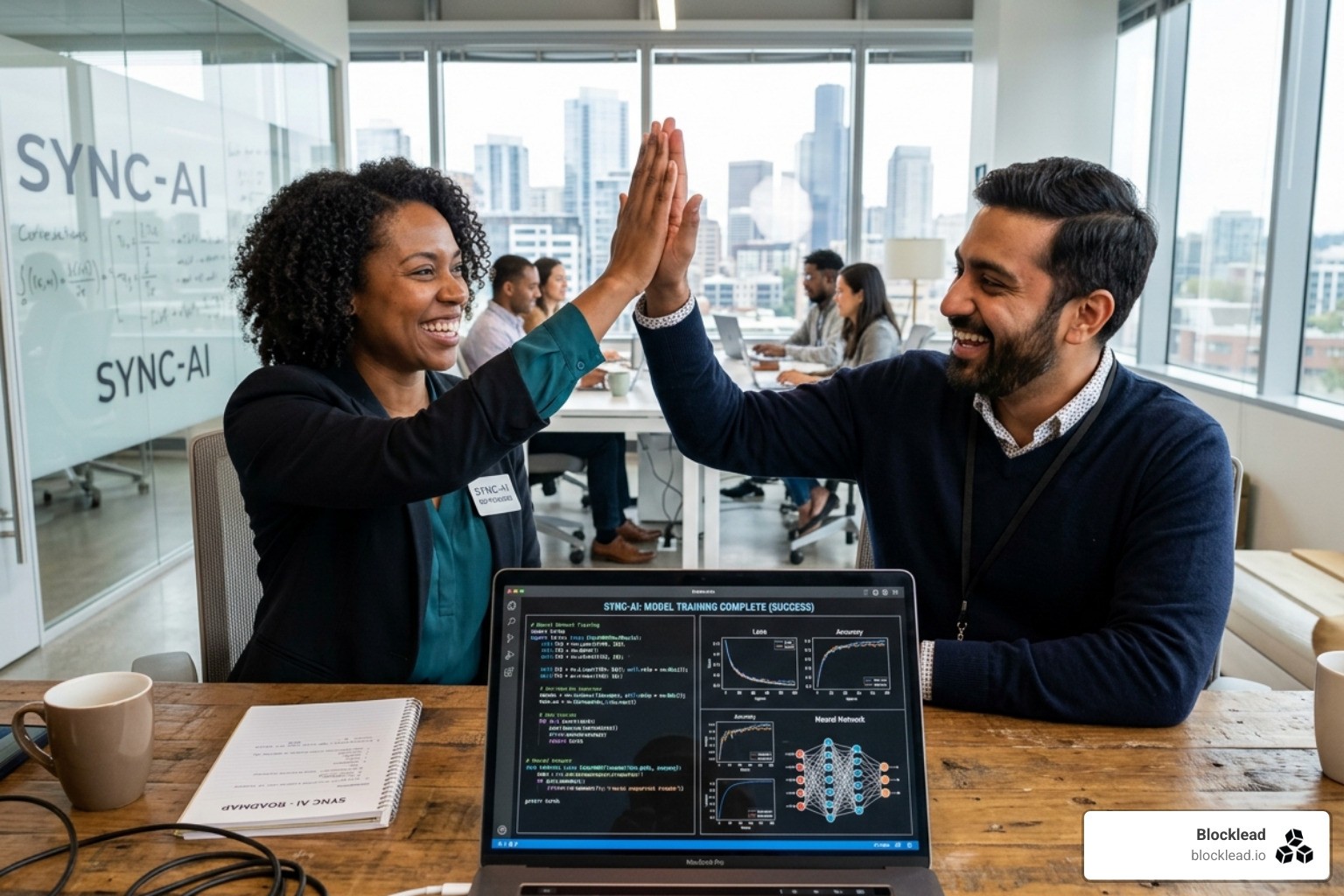
Discover proven strategies for co-founding AI companies in 2026: scout talent, vet AI-native partners, and scale to Series A without losing your mind.
Date
05/05/2026
Author
James Reed
WHY CO-FOUNDING AI COMPANIES IS THE HARDEST — AND MOST IMPORTANT — DECISION YOU'LL MAKE
Co-founding AI companies in 2026 means navigating one of the most competitive startup landscapes ever seen. Here's what you need to know fast:
The fastest paths to finding an AI co-founder:
Accelerator networks — Y Combinator and Founder Institute alumni pools are dense with technical talent actively looking for partners
Open-source communities — Contributors to projects on GitHub, Hugging Face, and research collectives like FOR.ai are often pre-vetted for technical depth
Hacker houses and fellowships — San Francisco-based communities (like Z Fellows) are where many agentic AI teams form today
Cold outreach on LinkedIn — Posting a specific, high-signal problem statement attracts researchers and engineers who care about the domain
Hackathons — Low-risk way to test a working relationship before signing anything
Finding the right co-founder has always been brutal. But if you're building in agentic systems, applied AI, or dev tooling, the stakes are even higher — and the talent pool is thinner than it looks.
The numbers tell part of the story. Y Combinator-backed companies now carry a combined valuation of over $1.3 trillion. OpenAI alone is valued at $500 billion. Anthropic raised $30 billion in a single funding round at a $380 billion post-money valuation. These aren't flukes — they're the result of founding teams that paired the right technical depth with the right domain instincts at exactly the right moment.
But most early-stage founders aren't sitting on a warm network of PhD researchers or ex-Google Brain engineers. They have a sharp idea, a real problem to solve, and no clear path to the person who can help them build it.
That gap — between a strong AI concept and a credible co-founding team — is where most technical founders stall out before they ever reach a Series A.
This guide is built specifically for that moment.
THE EVOLUTION OF CO-FOUNDING AI COMPANIES IN 2026
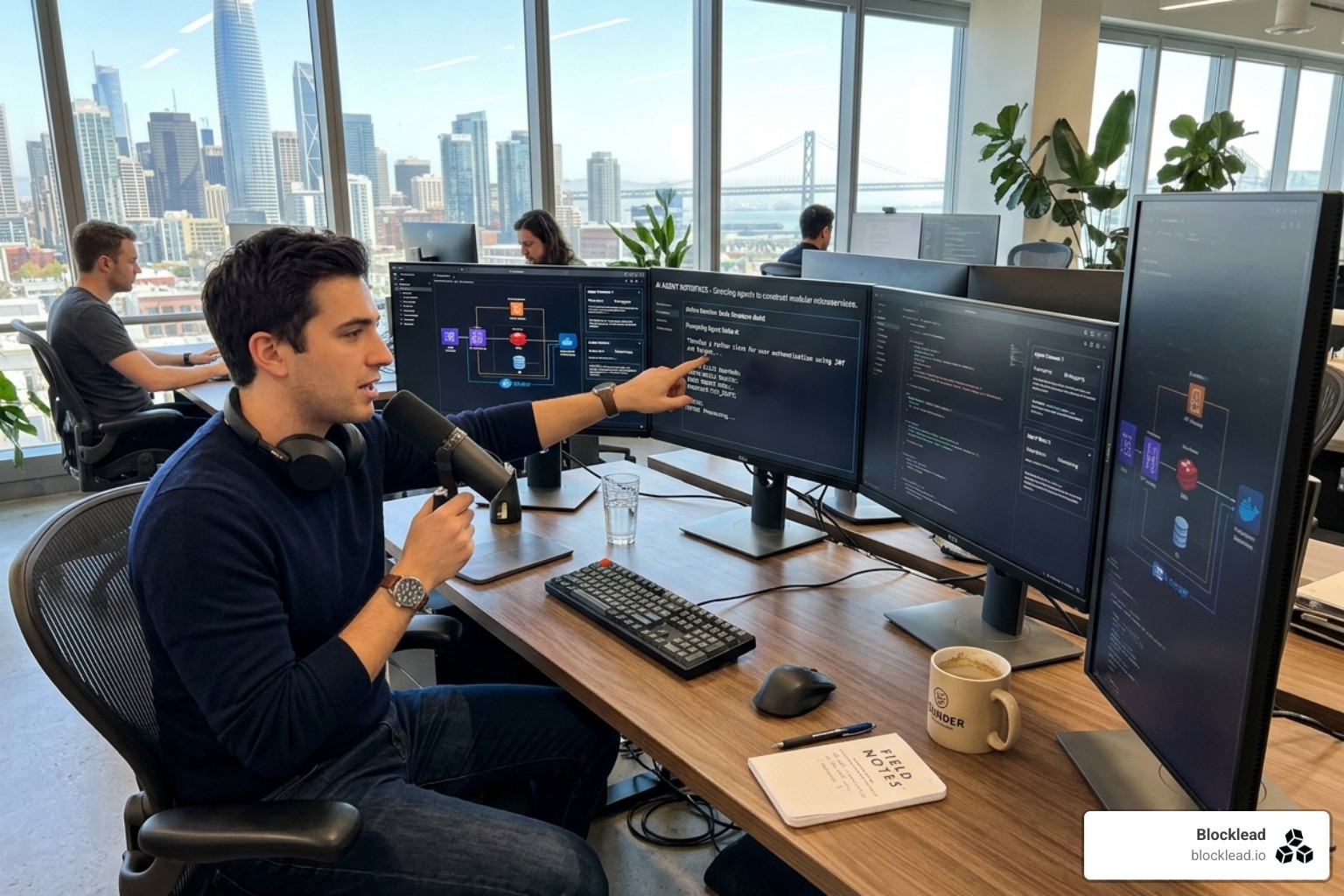
The year 2026 has fundamentally rewritten the rules of entrepreneurship. We have moved past the era where you needed a hundred engineers to build a world-class product. Today, the rise of advanced AI models like Claude from Anthropic has enabled "vibe coding"—a phenomenon where founders describe outcomes in natural language and AI agents handle the heavy lifting of code generation.
This shift has birthed the #NoVC movement. Scrappy teams are realizing they don't necessarily need traditional venture capital to hit meaningful milestones. In fact, industry leaders now believe a five-person team powered by agentic systems can build the next billion-dollar company. This is the ultimate multiplier; solo founders now have superpowers to move with the speed of an entire department.
When we look at the giants of the industry, like Wojciech Zaremba at OpenAI, we see a transition from pure research to high-impact product leadership. Zaremba's journey from mathematical olympiads to managing GPT models and GitHub Copilot underscores a key trend: the best AI co-founders aren't just researchers; they are builders who understand how to make AI actionable.
Furthermore, the concept of "Constitutional AI" pioneered by Anthropic has become a standard for safety and alignment. Founders are no longer just building for performance; they are building for reliability. Understanding these frameworks is essential for anyone Inside the AI Venture Studio Playbook.
Scouting Research Talent and PhD Dropouts
The talent war in 2026 is concentrated in "hacker houses" across the San Francisco Bay Area. We are seeing a massive surge in young founders—some as young as 16 or 18—raising millions. For example, a Stanford dropout recently raised $64 million for an AI math startup, while MIT freshmen secured $2.7 million for police-tech AI.
These "formidable founders" often leave elite institutions because they believe the "AI window" is a fleeting opportunity. They aren't waiting for a degree; they are chasing mathematical superintelligence now. If you are looking for a technical partner, you need to be where these people congregate. This includes specialized fellowships and high-intensity environments where technical depth meets a "maniacal" urge to ship.
Look at Denis Yarats, the CTO of Perplexity AI. His background includes a PhD from NYU and time at Facebook AI Research (FAIR). His success shows that while the "dropout" narrative is popular, deep academic roots in reinforcement learning and natural language processing still provide a massive "unfair advantage" in the AI race.
The Shift from Technical to Domain Expertise
While technical talent is vital, 2026 has seen a significant shift toward domain expertise. As AI tools lower the barrier to building an MVP, the "moat" shifts to understanding industry-specific bottlenecks.
Applied AI is about solving real-world problems—like the 73% of businesses that still process invoices manually. Founders like Christian Szegedy, who moved from Google to xAI, represent the elite tier of talent applying advanced mathematics to complex systems.
To find a co-founder, you must move beyond "I have an AI idea" to "I have validated a solution for this specific industry bottleneck." This involves rigorous solution testing and persona interviews. If you can prove a business case with real metrics, you become a magnet for the technical talent that wants to solve hard, meaningful problems.
PROVEN STRATEGIES FOR FINDING TECHNICAL PARTNERS
Finding a partner is no longer just about browsing LinkedIn. It's about immersion in the ecosystems where the "Transformer architecture" was born and where the next generation of agentic systems is being built.
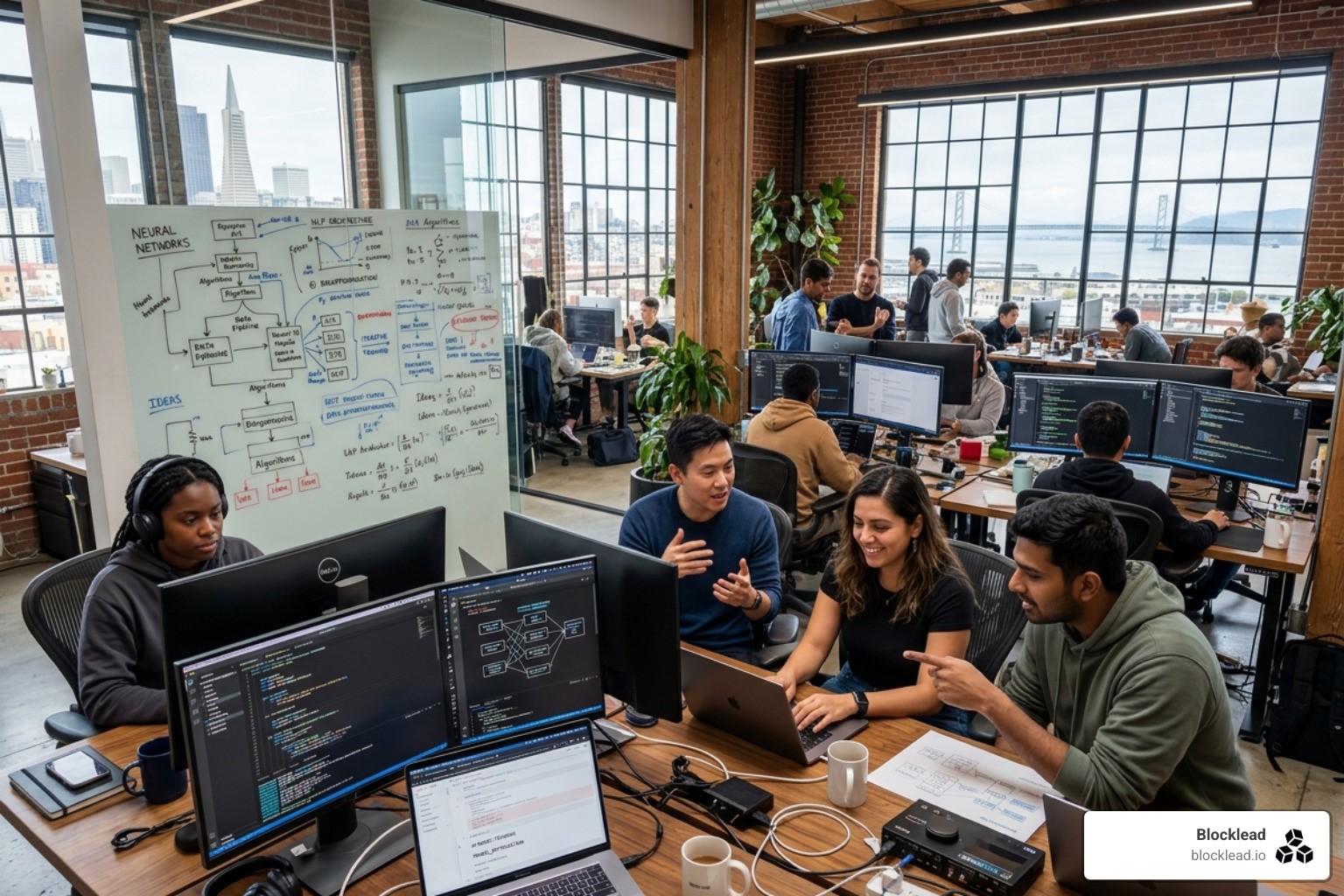
Many successful pairings happen within accelerator networks. Y Combinator remains a dominant force, with alumni companies reaching a combined valuation of $1.3 trillion. These environments compress months of networking into weeks of high-intensity collaboration. If you aren't in a batch, you should be looking at The Rise of AI Venture Studios: A New Co-Funding Model to find structured support.
Take Aidan Gomez, co-founder of Cohere. He co-authored the seminal "Attention Is All You Need" paper as a 20-year-old intern at Google Brain. His trajectory from researcher to CEO of a company valued at over $7 billion shows that technical partners are often found in collaborative research environments before they ever hit the mainstream job market.
Leveraging Global AI Research Networks
The search for a co-founder shouldn't be limited by geography, although the San Francisco Bay Area, Europe, and Latin America remain primary hubs. Open-source communities and research collectives like FOR.ai are goldmines for talent.
Founders like Dario Amodei of Anthropic chose to build a Public Benefit Corporation to align their mission with long-term human benefit. This "safety-first" mission attracted some of the brightest minds from OpenAI. If your startup has a strong ethical or mission-driven "why," you will find it much easier to recruit high-level researchers who are tired of building "just another app."
In Europe and Latin America, the focus is often on multilingual LLMs and localized applied AI. These regions are producing world-class talent that is often more accessible than the hyper-competitive Silicon Valley pool.
Vetting for the Future of Co-founding AI Companies
When vetting a partner, you need to look for more than just coding skills. In 2026, you need someone who understands agentic workflows and the Model Context Protocol (MCP). Shipping speed is the primary metric. You want a "formidable" partner—someone who overcomes obstacles regardless of the difficulty.
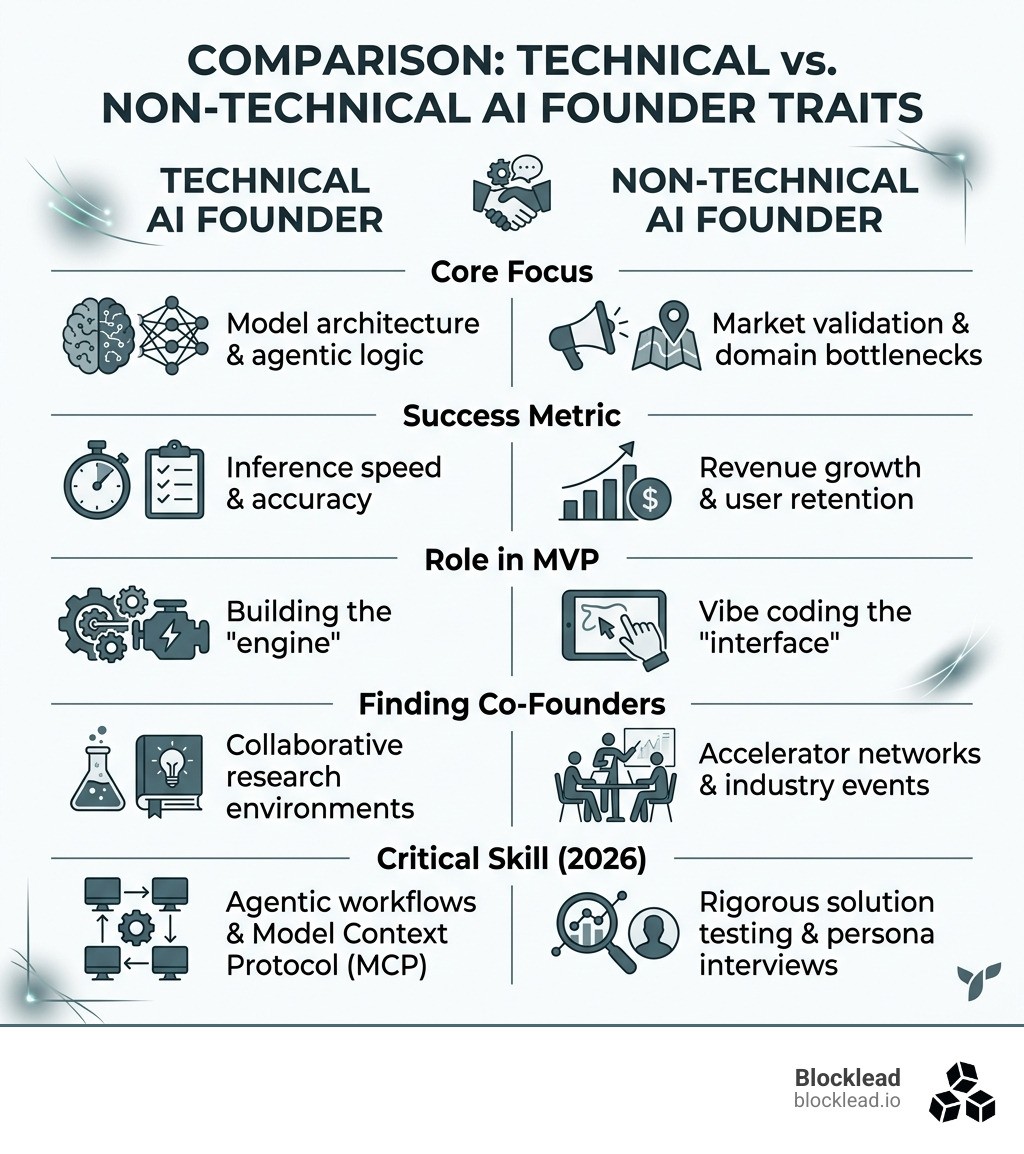
Trait | Technical AI Founder | Non-Technical AI Founder |
|---|---|---|
Core Focus | Model architecture & agentic logic | Market validation & domain bottlenecks |
Success Metric | Inference speed & accuracy | Revenue growth & user retention |
Role in MVP | Building the "engine" | Vibe coding the "interface" |
Network | GitHub, ArXiv, Research Labs | Industry leaders, Investors, Customers |
ASSESSING THE "AI-NATIVE" MINDSET IN A PARTNER
An "AI-native" partner doesn't just use AI; they think in terms of automation and scale from day zero. They utilize AI agents for market research, customer outreach, and even generating the "artifacts" of a startup—like pitch decks and financial models.
This mindset is about achieving "zero-equity execution" where possible. Before hiring a full team, an AI-native founder uses a suite of tools to replace traditional roles. They understand How Co-funding Accelerates AI Startup Success by leveraging existing frameworks to move faster.
Scaling with AI-Native Co-founding Companies Frameworks
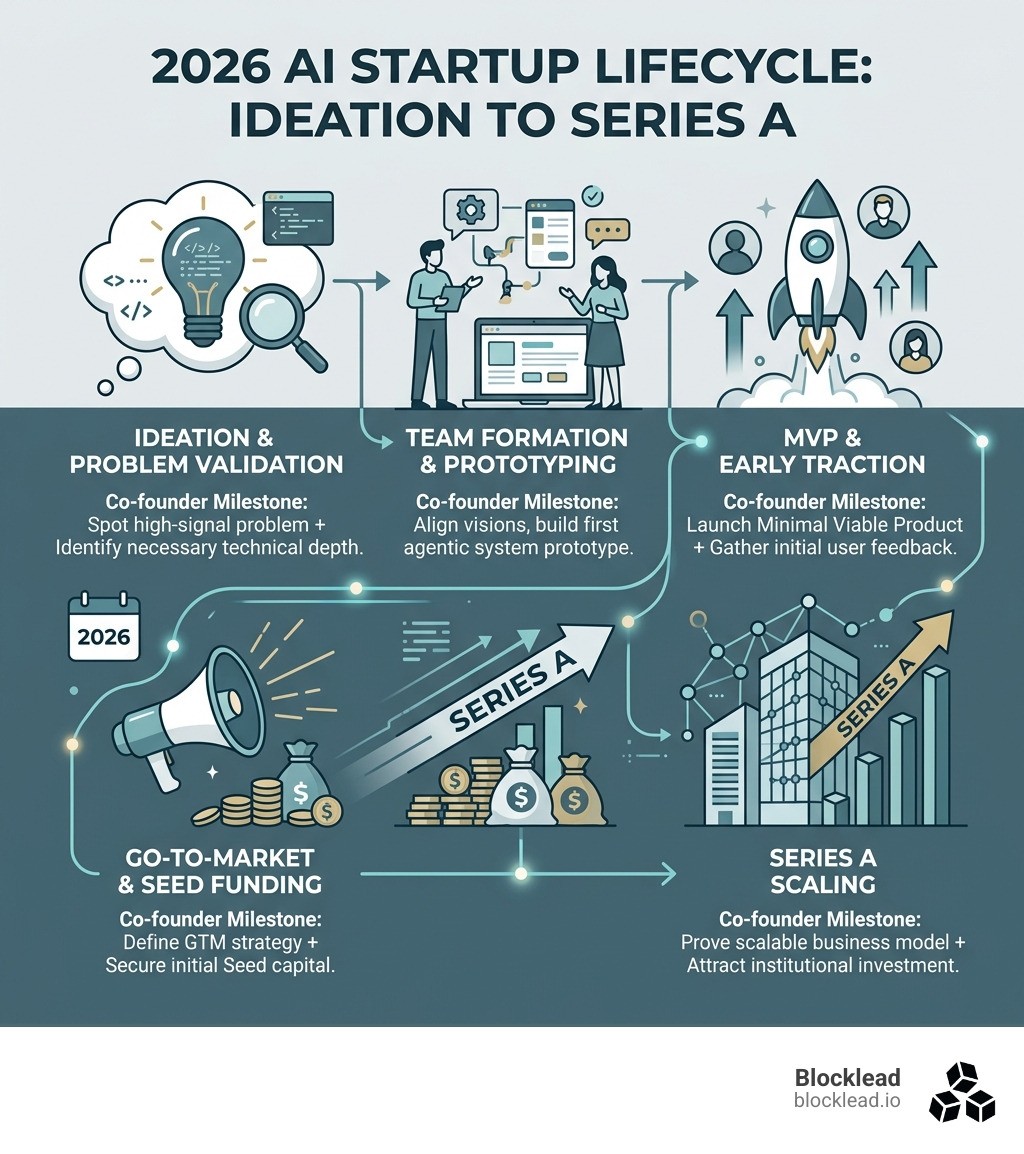
To scale, you need a partner who can move from ideation to Series A readiness using curated playbooks. This includes:
Persona Testing: Using AI to simulate customer interviews and validate assumptions.
Artifact Generation: Automatically creating business plans and revenue projections that stand up to investor scrutiny.
Rapid Iteration: Using user feedback items to prioritize features in real-time.
A partner who understands these workflows can help you project a Year 1 revenue of $250K ARR and scale to $12.5M ARR by Year 5, as seen in many successful B2B SaaS models today.
Navigating the AI Window of Opportunity
The "AI window" is a period of rapid infrastructure development. Talent density is at an all-time high, and the cost of hesitation is greater than the risk of failure. Real-world success stories, like Zach Yadegari co-founding Cal AI at 18 and generating $30 million annually, prove that timing is everything.
Whether it's an AI nutrition app or a $14 billion acquisition like Scale AI (where Meta acquired a 49% stake), the common thread is rapid validation. You need a co-founder who understands that in 2026, "perfect" is the enemy of "shipped."
FREQUENTLY ASKED QUESTIONS ABOUT AI CO-FOUNDERS
Do I need a technical co-founder for an AI startup in 2026?
Technically, no. With "vibe coding" and advanced AI agents, a solo founder can get an MVP to market. However, for scaling agentic systems and securing a Series A, having a technical partner with deep "pattern recognition" in AI architecture remains a massive advantage.
How do I split equity with an AI-native partner?
Standard equity splits (50/50 or 33/33/33) still apply to human co-founders to ensure long-term alignment. However, many founders are now using "AI co-founders" (platforms that provide execution support) for zero equity, allowing the human founders to retain more control of the cap table.
Where do most AI founders meet in the current ecosystem?
Most meet in San Francisco hacker houses, through YC/Founder Institute alumni networks, or by collaborating on open-source projects. LinkedIn remains a powerful tool for cold outreach if your problem statement is high-signal enough.
CONCLUSION
Finding a co-founder for co-founding ai companies doesn't have to be a journey into madness. By focusing on talent density, domain expertise, and an AI-native mindset, you can build a team capable of reaching unicorn status with just a handful of people.
At Blocklead, we live this reality every day. We are a practitioner-led team that co-founds AI startups from zero. We don't just advise; we act as your co-founders, providing the capital, operators, and technical expertise in agentic systems and developer tooling needed to get from day zero to Series A.
The AI window is open. Don't spend it looking for a partner in the wrong places.